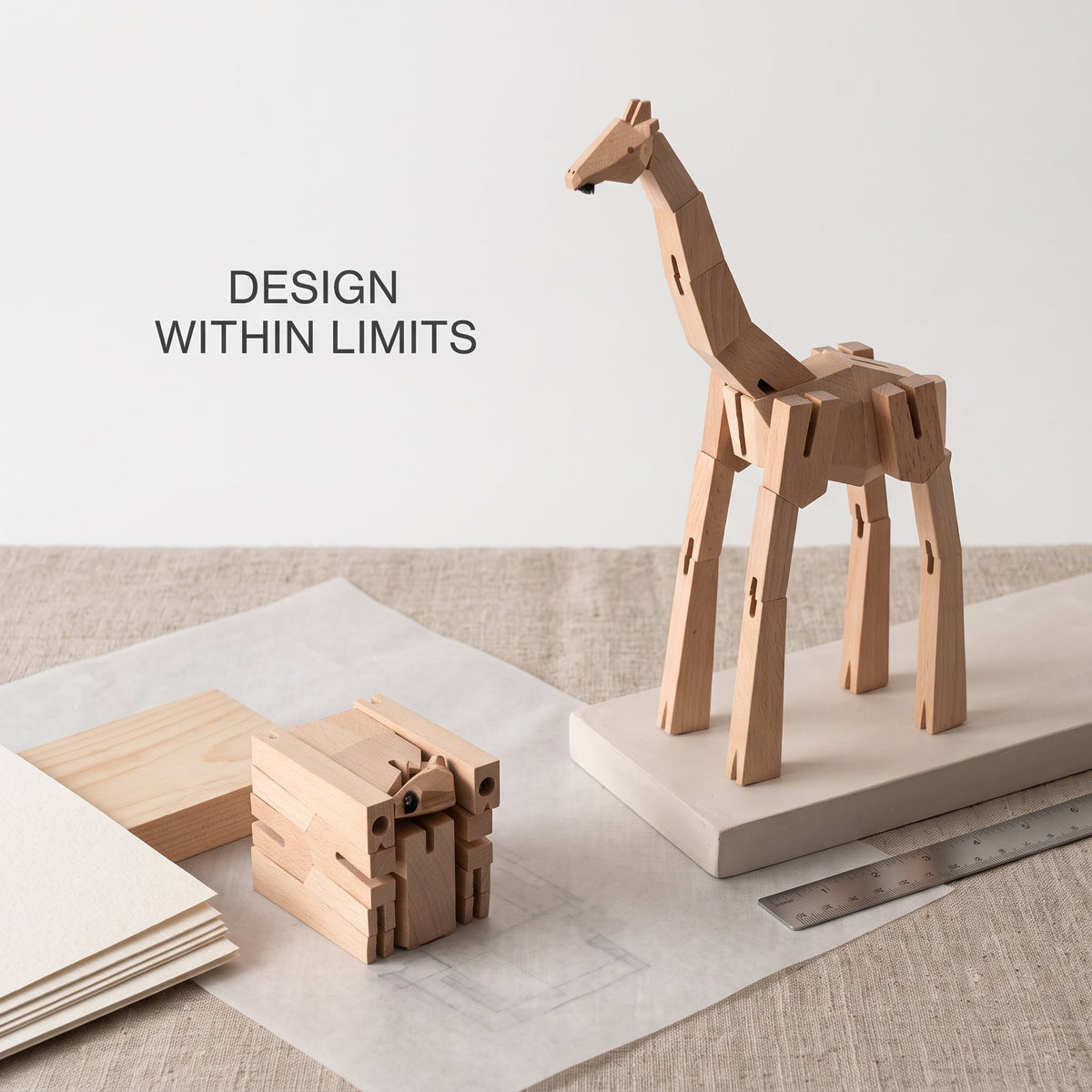
Why Poseability Changes the Way We Connect With Everyday Objects
There is a quiet difference between an object you only look at and an object you are invited to touch.
Most home decor is static. You choose a position, place it on a shelf or desk, and leave it there. Poseable objects introduce another possibility: the composition can keep changing after the designer has finished the product.

The Difference Between Looking and Interacting
Touch changes our relationship with objects. The moment you rotate a joint, shift a posture, or find a new balance, you are no longer only observing the design. You are participating in it.
This is one reason Morphits® was designed to transform and move. The animal is recognizable, but the final expression is not fixed.
Why Small Movements Matter
A pose does not need to change dramatically to change the way an object feels.
- Movement Creates Attention: Repositioning an object makes you notice its form again instead of letting it disappear into the background.
- Posture Creates Personality: A tilt, reach, lean, or turn can make the same character feel curious, calm, energetic, or reserved.
- Interaction Creates Ownership: When you decide how an object should sit in your space, the arrangement becomes partly yours.
A Different Kind of Home Decor
Interactive objects occupy an interesting space between sculpture, puzzle, and desk companion. They can be displayed like small works of design, but they do not ask to remain untouched.
That quality makes them particularly well suited to shelves, desks, studios, and living spaces where objects are experienced at close range. Instead of becoming a fixed visual accent, they can change with your mood, your workspace, or simply your curiosity.
Design That Does Not End at the Factory
Traditional product design often assumes that the designer determines the final form. Poseability gives some of that decision back to the person who owns the object.
For Morphits®, I think of each configuration as another version of the same design. The object leaves the studio unfinished in a useful sense: not because anything is missing, but because its final character can continue to evolve.
Sometimes the smallest movement is enough to make a familiar object feel new again.