
Spatial Reasoning: How 3D Puzzles Boost Math Skills Early On
We often think of math as numbers on a page: 1 + 1 = 2. But long before a child learns to count, they are learning the foundation of all advanced mathematics: Spatial Reasoning. This is the ability to visualize objects in 3D space, understand how shapes fit together, and rotate them mentally.

The Geometry of Play
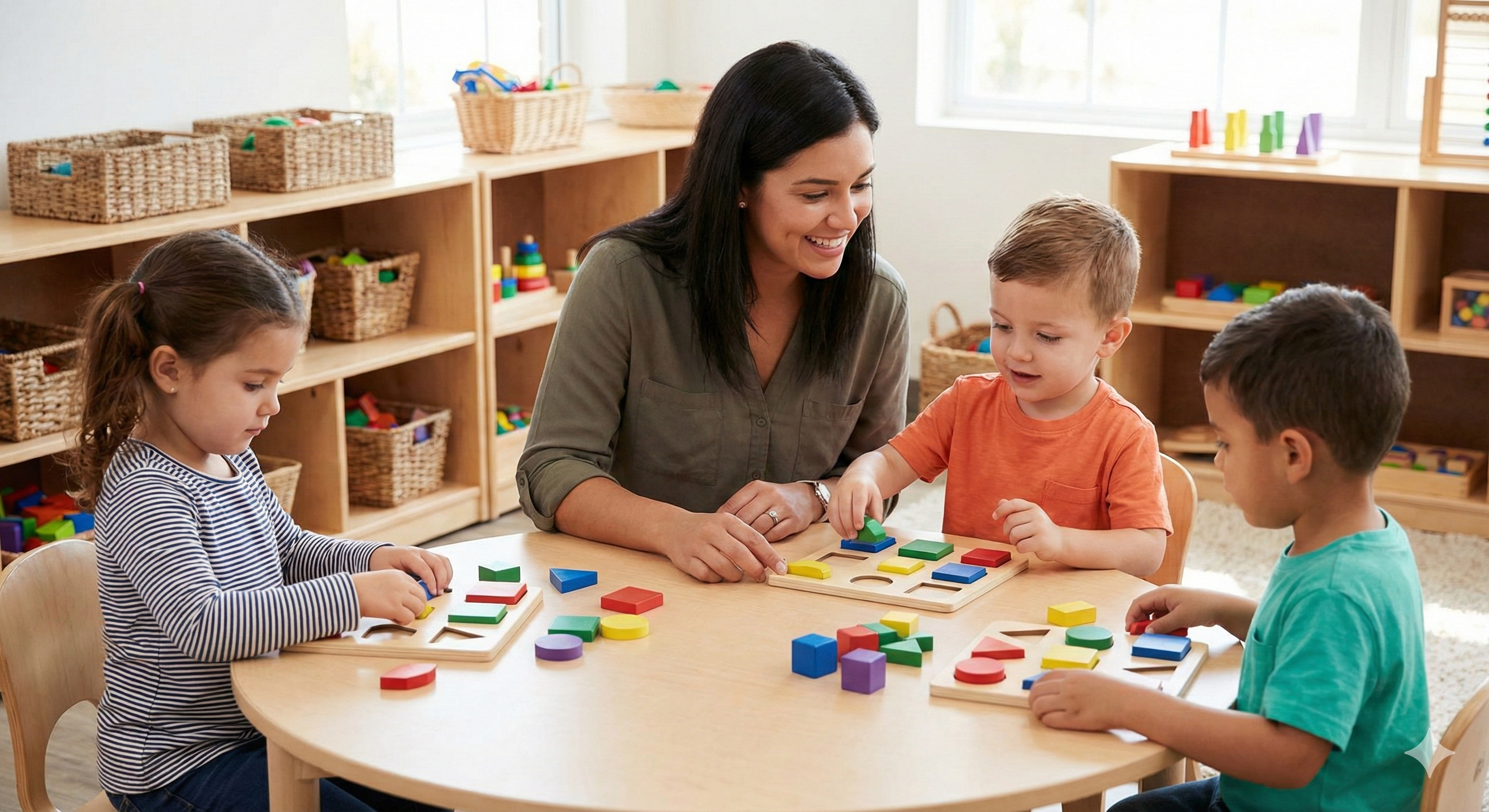
When your child tries to twist a Morphits toy back into a cube or fit a square block into a round hole, they are doing geometry. They have to assess the shape of the object, compare it to the space available, and physically manipulate it to make it fit. This is "hands-on" physics and math.
Predicting the Future
Strong spatial skills are one of the best predictors of success in STEM fields (Science, Technology, Engineering, and Math). By playing with poseable wooden toys, children learn to predict outcomes: "If I twist this leg here, will the robot stand up or fall over?" This constant testing and re-testing builds a logical, scientific mind.
3D vs. 2D
Apps can teach counting, but they are terrible at teaching spatial reasoning because a screen is flat. You cannot feel the weight, see the back, or truly rotate a digital object. To learn about the physical world, children need physical objects. They need to feel the corners and the curves.
Give their brain a workout.



コメントを書く
このサイトはhCaptchaによって保護されており、hCaptchaプライバシーポリシーおよび利用規約が適用されます。