From Sketch to Prototype: Designing an Object That Actually Transforms
A sketch can make a transformation look effortless. A prototype is where the argument begins.
On paper, one line can pass through another. A leg can rotate through a body. A joint can exist exactly where the drawing needs it. Physical objects are less polite. Parts collide, balance shifts, proportions change, and movements that looked elegant in two dimensions can become awkward in the hand.

A Transforming Object Has More Than One Design Problem
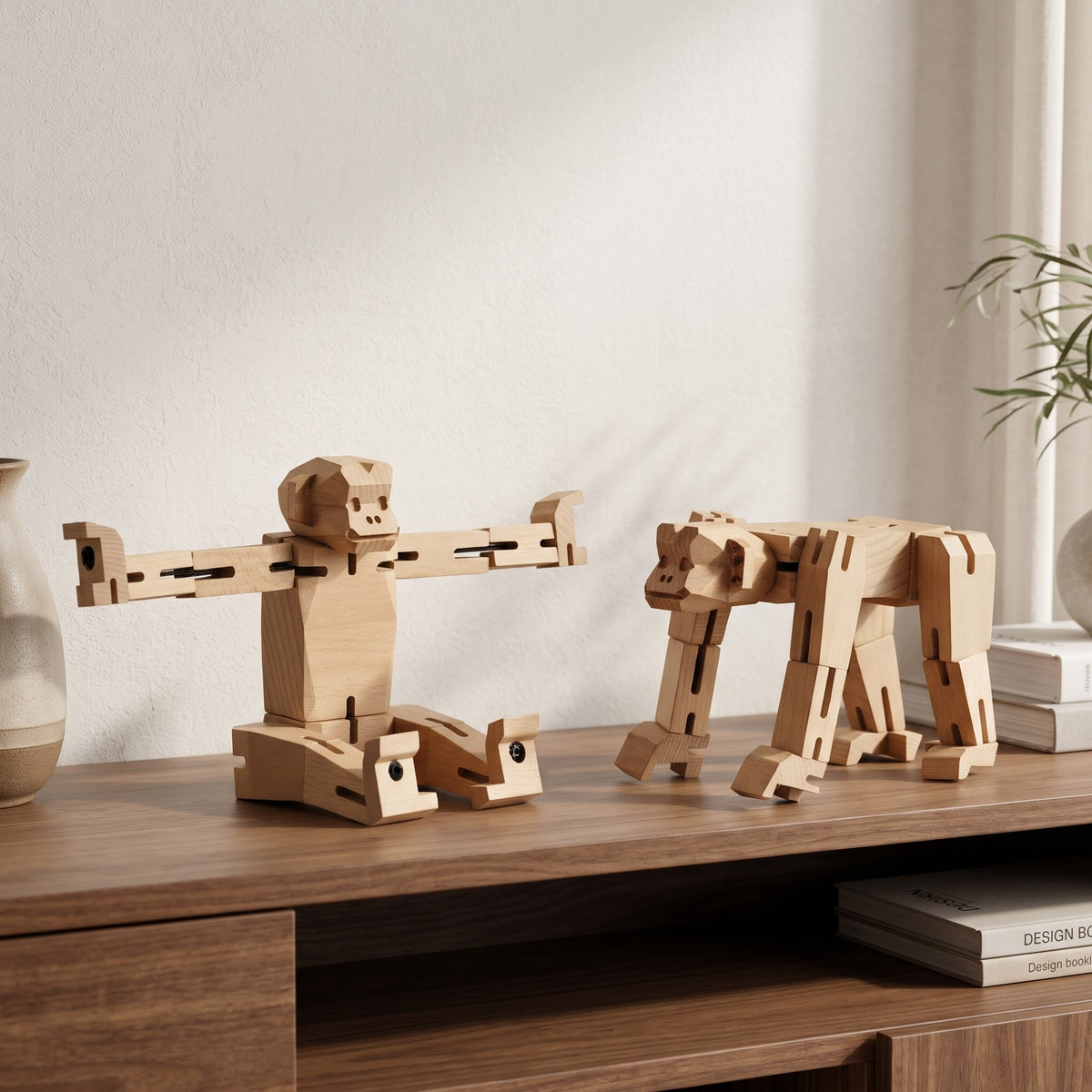
Designing Morphits® is not only about making a recognizable animal. The object also needs to return to a compact geometric state, move in a satisfying way, and remain visually coherent in the positions between those two conditions.
That means each decision affects several others at once.
What a Prototype Reveals
- Range of Movement: A joint can look correct in a drawing but still need adjustment before it creates useful, expressive positions.
- Proportion and Balance: Small changes in the length or mass of a part can change both the animal's character and the way the object physically sits.
- Transformation Logic: Parts must move in relation to one another so the compact form and the expanded form feel like two states of the same object rather than two unrelated shapes.
Why Repetition Matters
Prototyping is a conversation between intention and reality. You change one dimension, test it, notice a new problem, and then discover that the problem may lead to a better idea.
Sometimes a limitation creates the character. A movement cannot happen in the obvious way, so another rotation or proportion produces a more distinctive posture. The physical constraint becomes part of the design language.
When the Mechanism Becomes the Expression
For a transformable object, the mechanism should not feel separate from the visual idea. The way Morphits® moves is also the way it gains personality.
The final object may look simple, but that simplicity depends on resolving many relationships at once: geometry, movement, balance, recognition, and touch.
The sketch starts the idea. The prototype tells you whether the idea can live in the real world.