
Are Wooden Toys Better for Development?
Are wooden toys better for development simply because they are made from wood? Not necessarily. The material can influence how an object feels and how long it lasts, but the more important question is what the toy asks the user to do. A good hands-on object invites movement, experimentation, problem-solving, and imagination rather than doing all the work for you.
The Problem with "Educational" as a Material Claim
It is easy to treat "wooden" and "educational" as interchangeable words, but development does not come from material alone. A wooden object can be passive, just as a plastic object can be highly engaging. What matters is the quality of the interaction and whether the design creates opportunities to practice useful ways of thinking and moving.
Enter Open-Ended, Hands-On Play
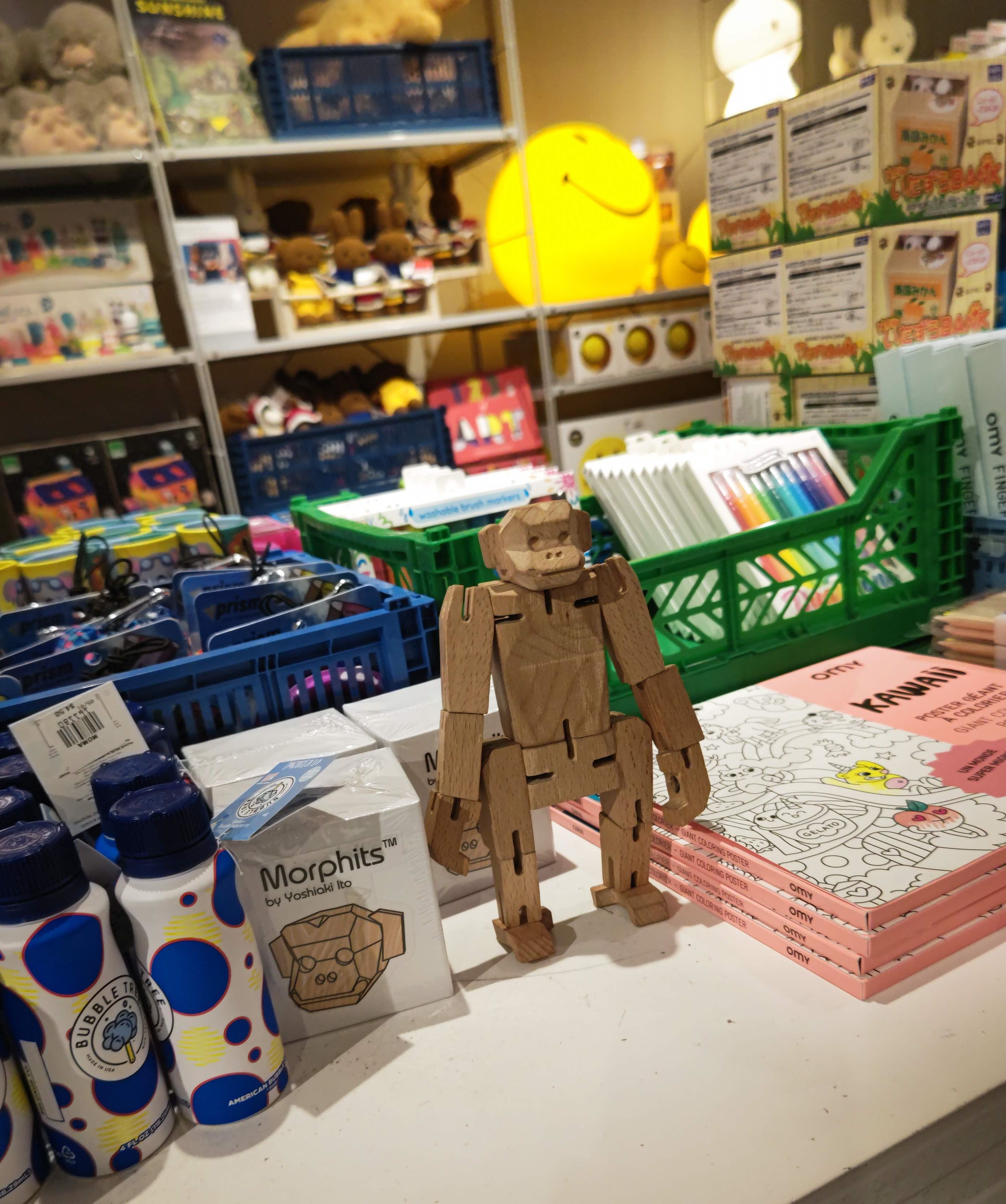
Puzzles and transformable objects can create that kind of interaction because the user has to participate. Morphits, for example, change form through folding, positioning, and experimentation. That activity can support several kinds of practice:
- Spatial Reasoning: Rotating and transforming a three-dimensional object encourages the user to think about how parts relate to one another in space.
- Fine-Motor Practice: Grasping, turning, folding, and positioning pieces requires controlled hand movements and coordination.
- Open-Ended Creativity: A poseable object without a screen or a single scripted outcome leaves room for experimentation, storytelling, and personal interpretation.
Design Matters More Than Material Alone
Wood can bring warmth, durability, and a satisfying tactile quality to play, but those benefits are strongest when the underlying design is thoughtful. Age appropriateness, construction, interaction, and repeat use matter more than simply checking a material box.
A good toy does not do the thinking for you.

Leave a comment
This site is protected by hCaptcha and the hCaptcha Privacy Policy and Terms of Service apply.