Article: Why Objects Without a "Correct" Position Stay Interesting Longer
Why Objects Without a "Correct" Position Stay Interesting Longer
Many products are designed around a single final state. There is one correct way to assemble them, display them, or use them.
But an object can become more interesting when the designer leaves part of the answer open.
With a poseable object, the owner is not only deciding where it belongs. They are deciding how it should stand, lean, reach, sit, or fold. That small freedom changes the relationship between person and object.

From Finished Form to Open System
A completely fixed sculpture presents the designer's conclusion. An interactive object can present a set of possibilities instead.
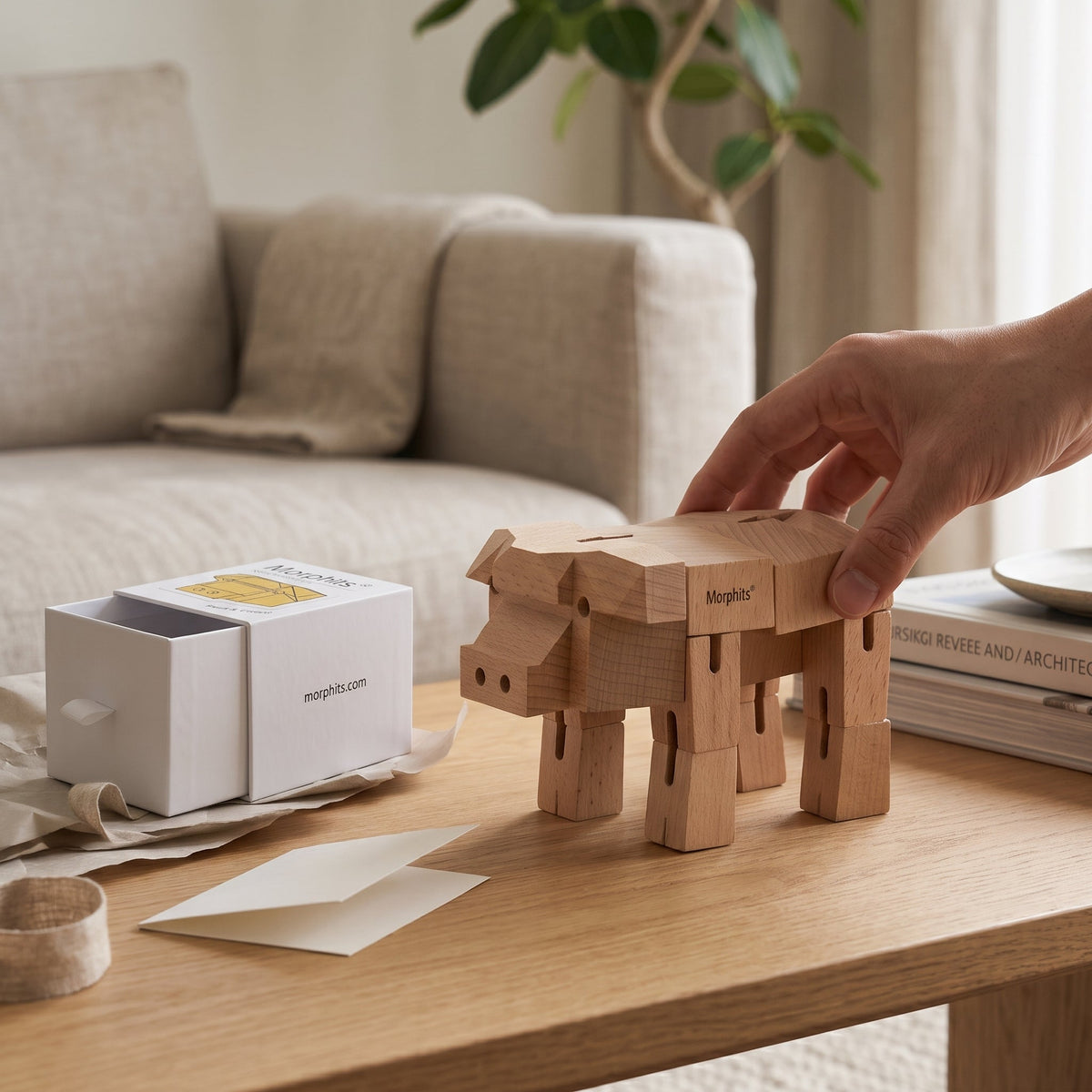
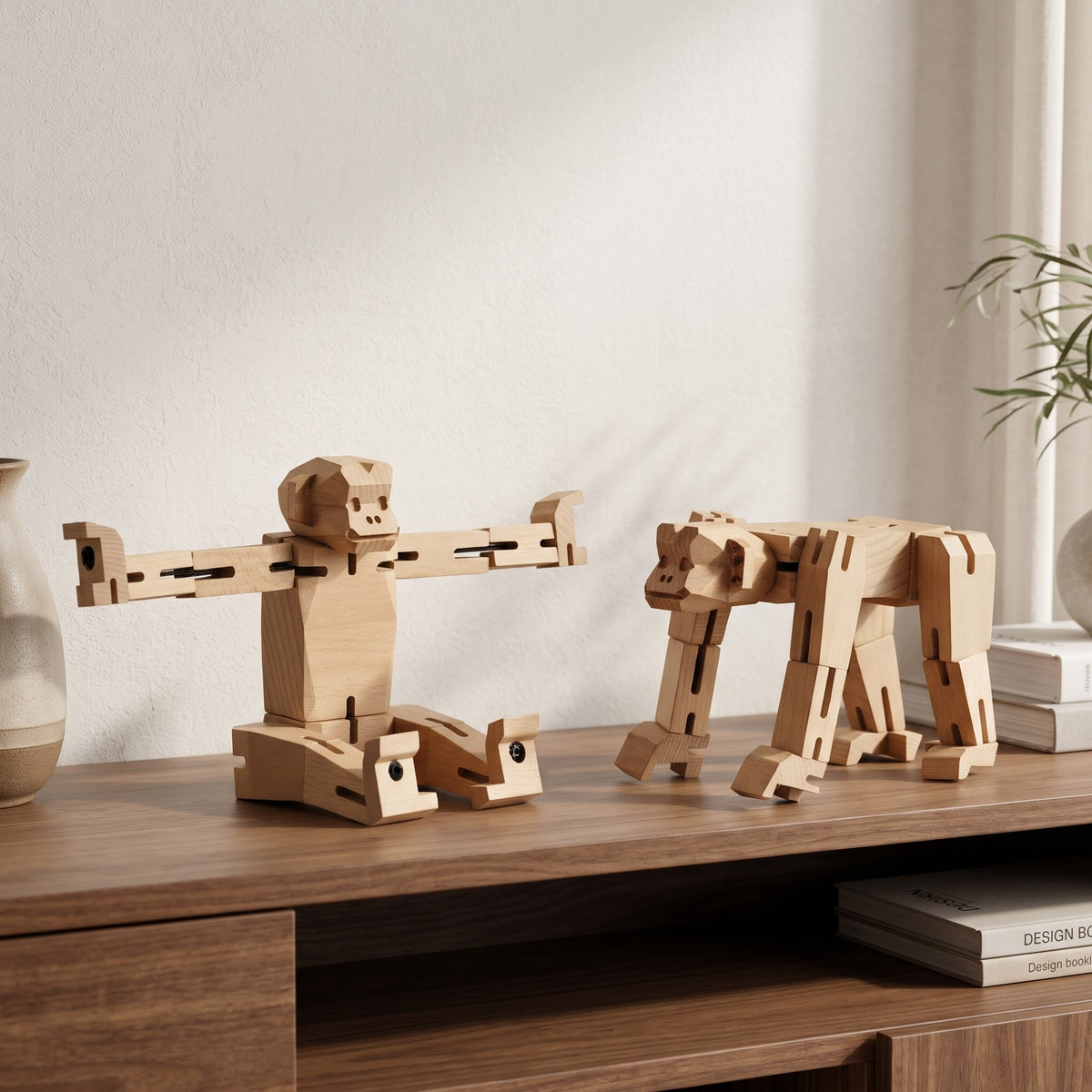
Morphits® has a recognizable structure, but it does not have one required final pose. The same wooden animal can feel energetic in one position and quiet in another. The geometry remains consistent while the character changes.
Why Open-Ended Objects Invite Rediscovery
- Participation: The owner makes decisions instead of only observing the designer's decisions.
- Renewal: A familiar object can feel different after a small change in posture or orientation.
- Personalization: Two people can own the same design and still display it in completely different ways.
The Value of Not Having One Answer
There is something satisfying about products that do not insist on a perfect configuration. They leave room for experimentation without requiring instructions for every possibility.
This is also why multifunctional design continues to interest me. When an object can be interpreted in more than one way, the user becomes part of the design process after the product leaves the studio.
Design as an Ongoing Conversation
Objects naturally become familiar over time. We stop noticing many things around us because they remain exactly where we placed them.
An object that can change gives us a small reason to notice it again. A new posture can alter the silhouette on a shelf. A compact form can become a character. A character can return to geometry.
There does not always need to be a correct position. Sometimes the possibility of another position is the point.